Data Strategy
Our Mission
Building and supporting technology solutions which allow for the capture and storage of tool traceability data within a centralized system which is accessible and usable by all lines of the business. This technology was designed with the following principles in mind:
- Ease of integration
- Scalability and Availability
- Documented
- Adaptable
- Auditable
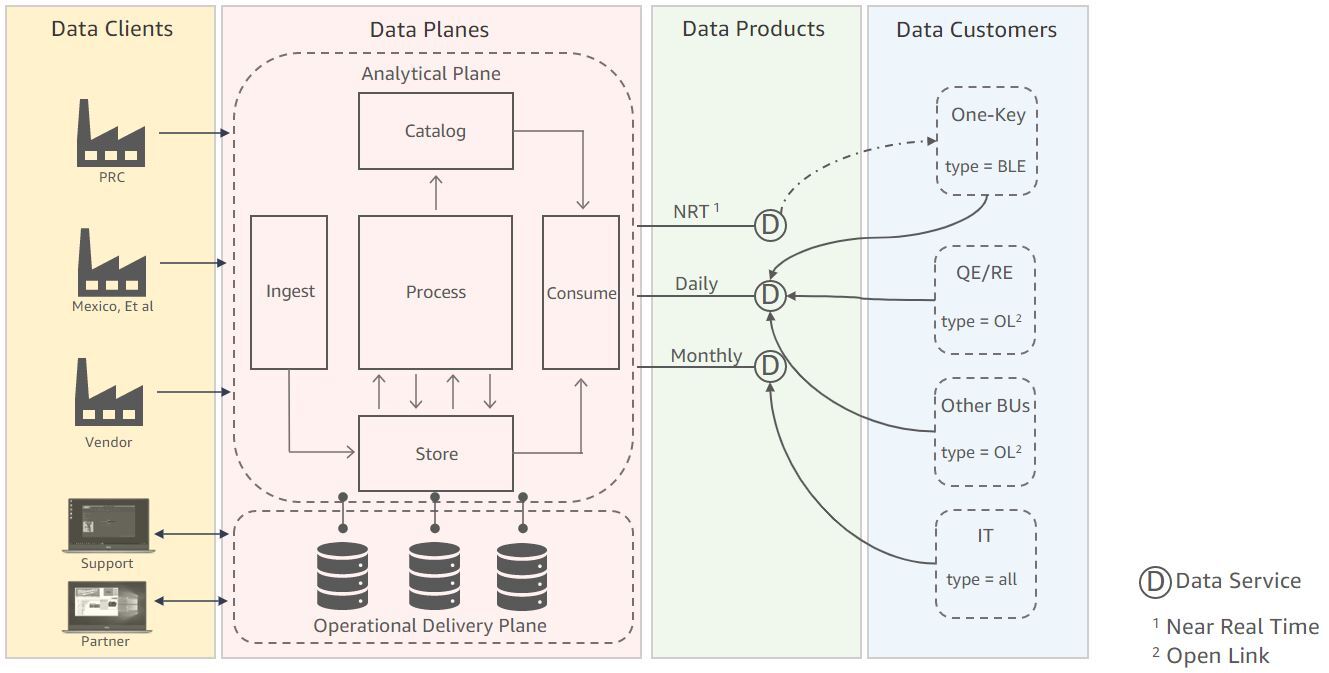
How will we accomplish this mission?
Point of Origin
We will strive to capture data as close to the point at which it was created as possible. This will have a few benefits. First, it will allow us to react more quickly in the event of data issues. Second, it will lower the burden on manufacturers to maintain data throughout the various stations and lines. Finally, it will allow us to be flexible in how we build our production lines.
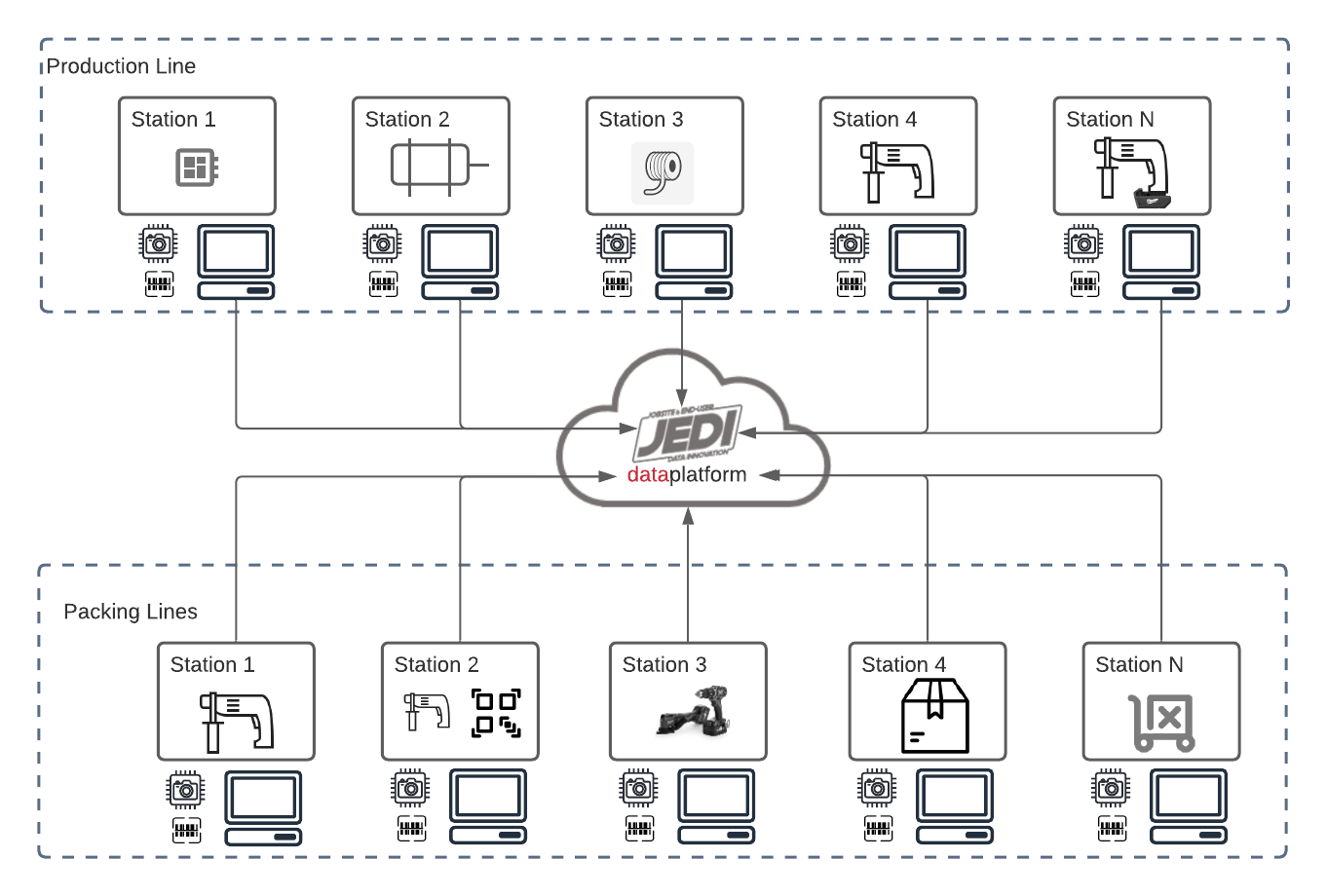
Knowing our Clients
With all client interactions, we want to capture as much detailed information about them and the activity which the are performing. This additional information will allow us to better understand the behaviors of each client and the data we are exchanging. This will help us during various troubleshooting and auditing processes to ensure the best possible operation of all systems involved. To support this, we’ve included a client portion of each request.
In this sample request, you can see a “client” portion of a request. This contains information such as what facility the request is from, the name of the software making the request, versions, and more.
{
  "id": {
    "mpbid": "0000000000",
    "serialNumber": "GA12340000000"
  },
  "client": {
    "timestamp": 1629479398,
    "facility": "FacilityCode",
    "lineId": "alpha",
    "stationId": "beta",
    "name": "SoftwareName",
    "user": "user1@milwaukeetool.com",
    "version": "1.2.3"
  }
}
Smart Programming
Build a single API which will provide the per-tool programmable details about a tool in a way that is repeatable in the event of a facility goes offline mid-production. This process is one which should be leveraged during preproduction (NPD), production, and post-production (Service) interactions with tools.
In this sample, a production facility is requesting 100 tool records for product 123. Note the inclusion of the PO and Job Number details. This information, along with the standard required fields, allows for this data to be recalled using the same information in the event a client has full or partial data loss prior to programming a tool.
{
  "productId": 123,
  "size": 100,
  "customerPO": "1234ABCD",
  "jobNumber": "ABC123",
  "client": {
    "timestamp": 1629479398,
    "facility": "FacilityCode",
    "lineId": "alpha",
    "stationId": "beta",
    "name": "SoftwareName",
    "user": "user1@milwaukeetool.com",
    "version": "1.2.3"
  }
}
Flexible Intake
Build a single API which supports clients providing any amount of data available about a tool at the time it is created. The intent is to limit the amount of data manufacturers are required to maintain between various assembly stations by supporting either mini or large batches of data points to be delivered.
In this sample, the client is sending the serial number of the tool, details about the firmware on the tool, and the born on date in which the tool was built to be recorded. If the client were to choose to, they may have excluded some details, the firmware section for example, and sent that at a later time.
{
  "id": {
    "mpbid": "0000000000",
    "serialNumber": "GA12340000000"
  },
  "firmware": {
    "partNumber": "012CDF",
    "version": "001FED"
  },
  "bornOnDate": "AC01DF",
  "client": {
    "timestamp": 1629479398,
    "facility": "FacilityCode",
    "lineId": "alpha",
    "stationId": "beta",
    "name": "SoftwareName",
    "user": "user1@milwaukeetool.com",
    "version": "1.2.3"
  }
}